How to clean and maintain a bronze plaque
Why cleaning and maintenance matter
Memorial plaques are more than markers. They are lasting tributes to loved ones, holding stories and memories that deserve to be preserved with care.
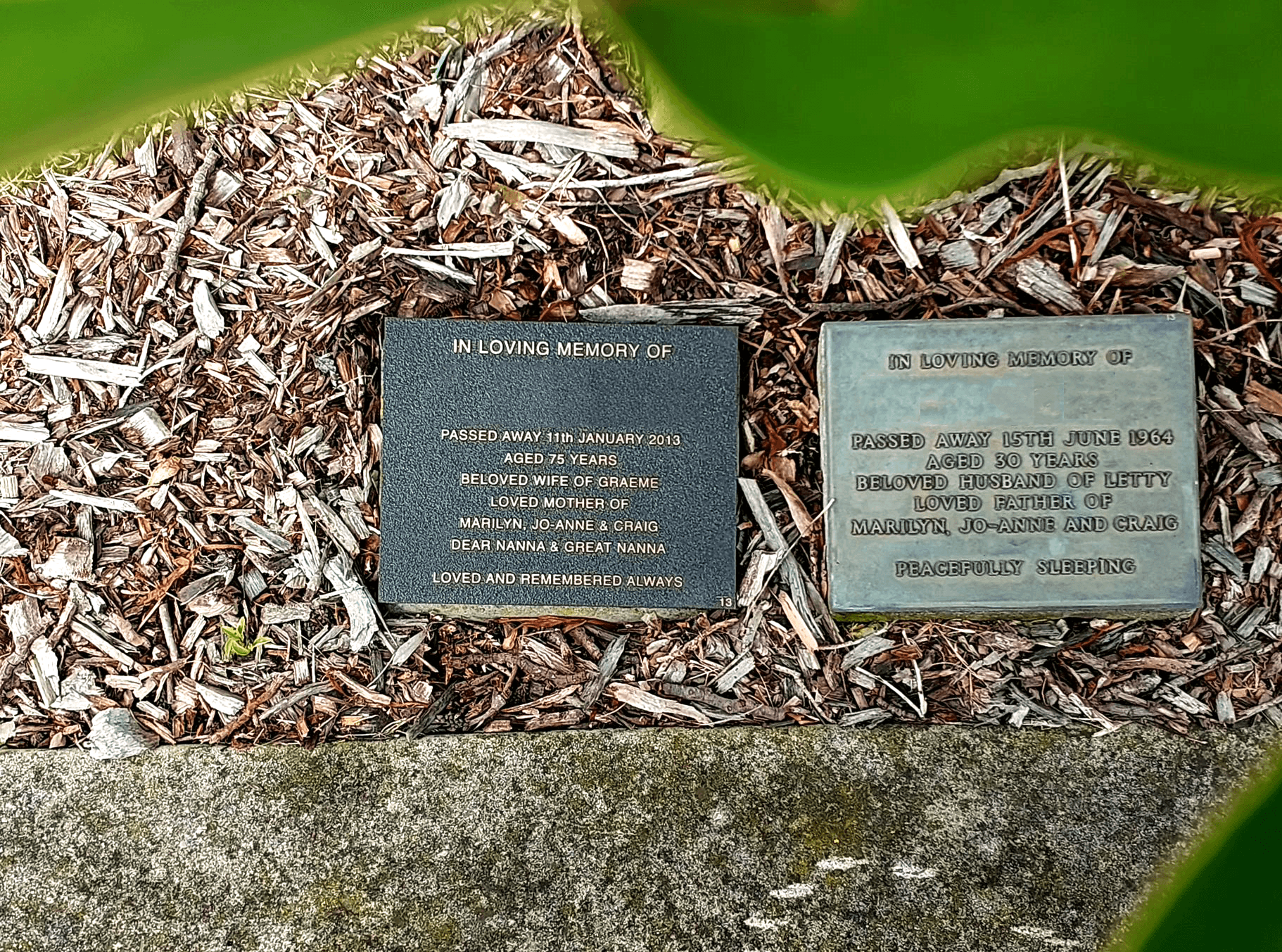
Bronze plaques are designed to last for generations, but over time, you may notice changes in their appearance. This is a natural process and part of the material’s character. Understanding why bronze changes colour can help you care for it properly.
Why does bronze discolour over time?
Bronze discolouration occurs primarily due to oxidation, a process called patina formation, and environmental exposure. These changes are normal and often valued for their unique beauty.
The process of patina formation
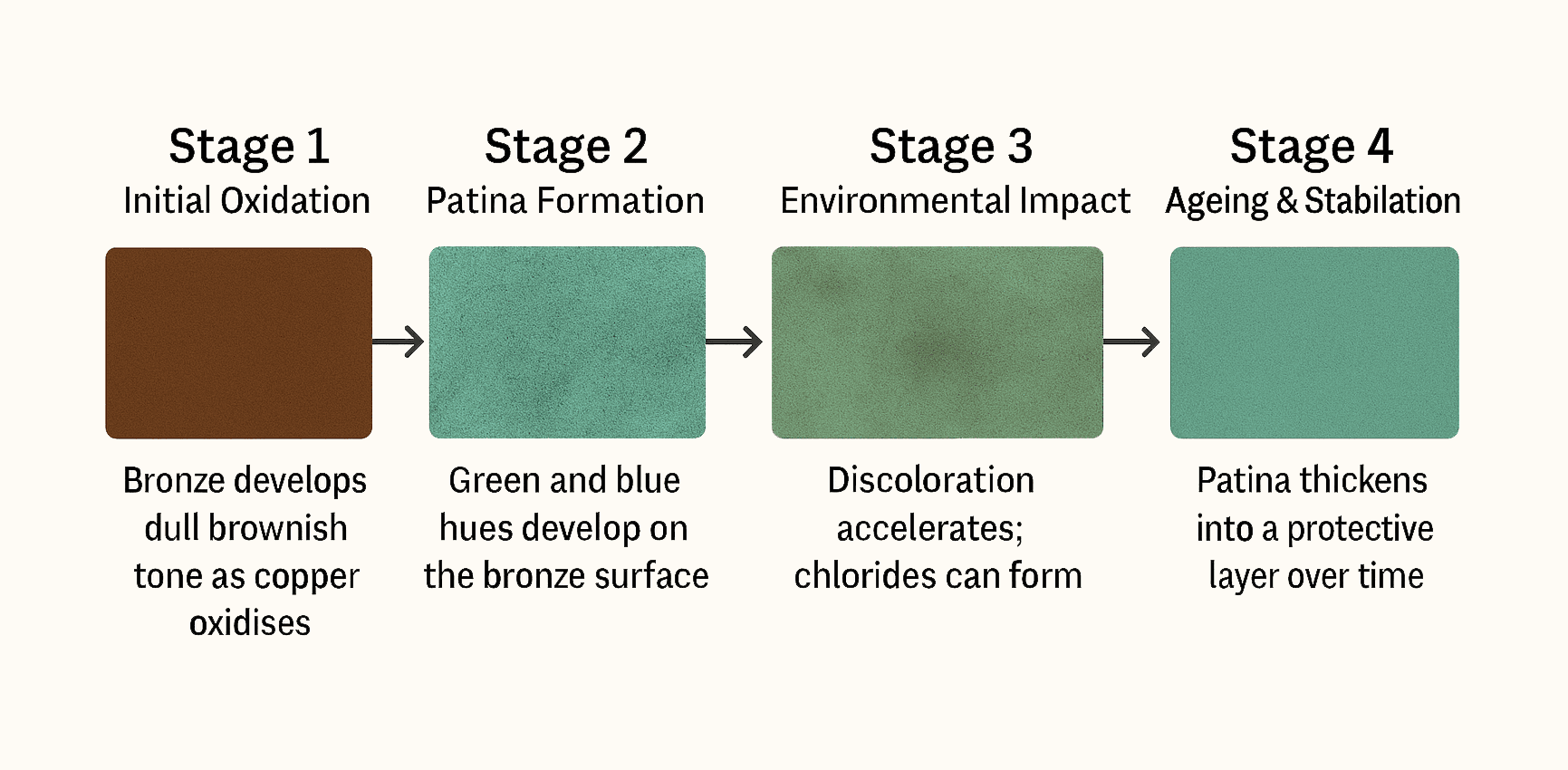
1. Initial Oxidation
Bronze is an alloy mainly composed of copper and tin. When exposed to air, the copper component oxidises, forming a layer of copper oxide on the surface. This gives the bronze a dull brownish tone.
2. Patina Formation
As oxidation continues, compounds such as copper carbonate, copper sulphate, and copper chloride develop. This creates a patina, which can range in colour from green to blue to brown.
3. Environmental Factors
Pollutants, humidity, and air quality can accelerate discolouration. For example, chlorides in coastal air can form copper chloride, giving bronze a greenish hue.
4. Ageing and Stabilisation
Over time, the patina thickens and acts as a protective layer, slowing further corrosion. Many people appreciate this patina for its character and heritage value.
The timeframe for these changes varies depending on the environment and care provided.
How to maintain your bronze plaque
- Routine cleaning - Dust the plaque regularly with a soft duster to keep the surface clean.
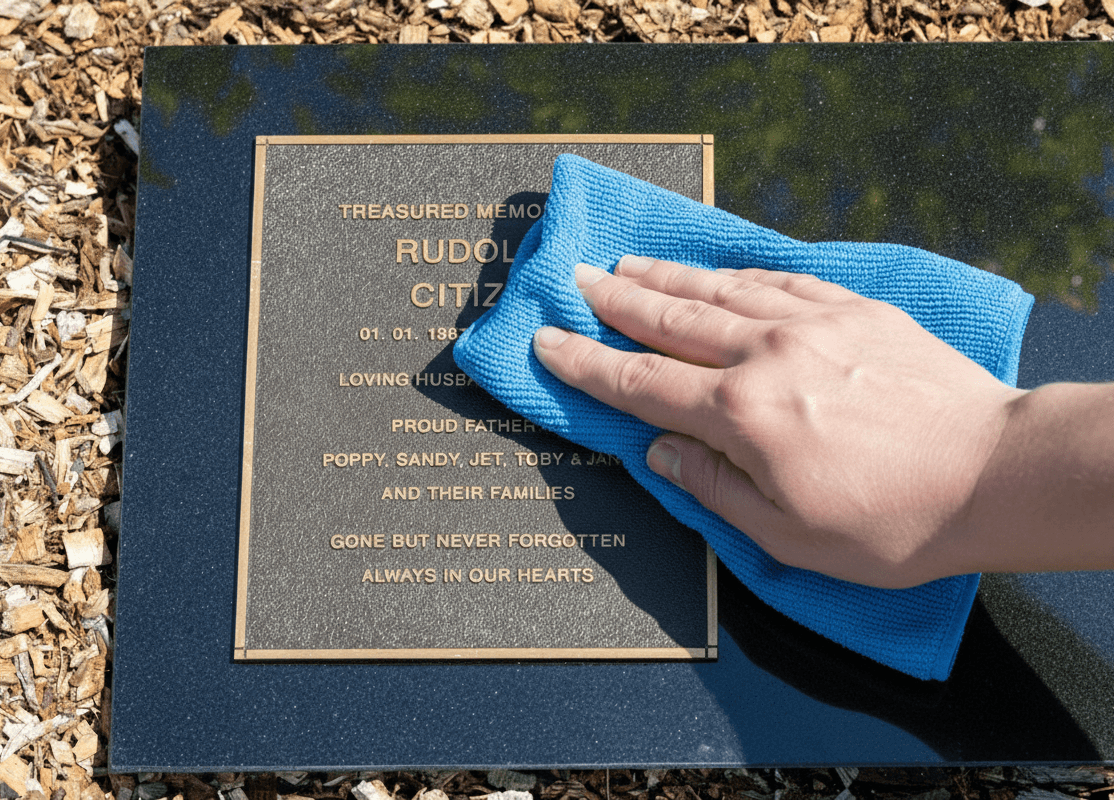
- Deep cleaning every three months - Use mild soapy water and a soft cloth to gently clean the plaque. This removes dirt buildup and slows the natural oxidation process that causes patina.
- Professional refurbishment - There’s no need for refurbishment if you’re happy with the natural patina. However, if you prefer a near-new look, we offer refurbishment services (up to twice in a plaque’s lifetime). After that, you can let it age gracefully or replace it.
Benefits of regular maintenance
- Preserves beauty and detail - Regular cleaning helps maintain the original shine and intricate design of your plaque.
- Slows oxidation and corrosion - Protective care slows natural aging processes like patina and surface wear.
- Extends longevity - Proper maintenance ensures your plaque remains strong and intact for decades.
- Honours your loved one’s memory - A well-maintained plaque reflects dignity and respect for the person it commemorates.
- Provides reliable weather protection - A high-performance protective film, when applied to plaques, shields them from Melbourne’s intense sun, heavy rain, and seasonal changes.
FAQs about bronze plaque care
Recommended articles

How to create the perfect memorial plaque
Discover how to create a meaningful and lasting memorial plaque with this step-by-step guide. Learn about messages, design tips, and trusted resources from SMCT.

5 things for end-of-life planning
End-of-life planning involves making decisions about the type of medical treatment you would like to receive if you become seriously ill or incapacitated and unable to make your own decisions.

A complete guide to understanding the cremation process
Moving through cremation with support. Our guide helps you understand each step as you honour a life well-lived.